Product

In-situ FTIR Analysis

Electrochemical Analysis

Electrochemical In-situ FTIR
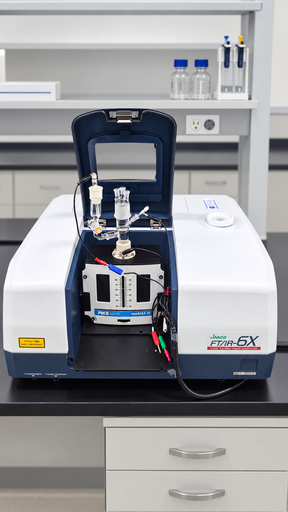
Electrochemical In-situ FTIR ATR-SEIRAS

Potential을 변화시키면서 Electrode / Electrolyte Interface에서 어떤 Molecule이 생성되고 사라지는지 FTIR로 관찰합니다.

Electrochemical In-situ FTIR은 전기화학 Potential을 제어하면서 Electrode Surface에 존재하는 Adsorbate, Reaction Intermediate 및 Interfacial Species의 IR Spectrum 변화를 측정하는 분석 방법입니다.

특히 ATR-SEIRAS (Attenuated Total Reflectance – Surface Enhanced Infrared Absorption Spectroscopy) 방식을 이용하면 Metal Thin-film Electrode와 Solution Interface에 존재하는 Surface Species의 변화를 높은 감도로 관찰할 수 있습니다.

Potential · ATR-SEIRAS · Electrode Interface · Flow Electrochemistry · Divided Cell · Electrocatalysis

Electrochemical FTIR의 핵심은 Electrode / Solution Interface입니다.

Electrolyte와 Solvent의 강한 IR Absorption 때문에 일반적인 FTIR Measurement에서는 Electrode Surface에서 발생하는 작은 변화를 관찰하기 어려울 수 있습니다. ATR-SEIRAS는 ATR Element 위의 Metal Thin-film Electrode 근처에서 Surface-enhanced IR Signal을 측정하여 Potential-dependent Interfacial Chemistry를 연구합니다.


Electrochemical FTIR로 무엇을 관찰할 수 있을까요?
01

Adsorption / Desorption

Potential 변화에 따라 Molecule이 Electrode Surface에 흡착하거나 탈착하면서 나타나는 IR Band 변화를 추적합니다.

02

Reaction Intermediate

Electrocatalytic Reaction 중 일시적으로 형성되는 Surface Intermediate Species를 관찰하여 Reaction Pathway를 연구합니다.

03

Mass-Transport / Flow Effect

Electrolyte Flow와 Reactant Supply 조건 변화에 따른 Electrochemical Response와 Surface Species 변화를 비교합니다.

04

Separated Half-cell Reaction

Working Electrode와 Counter Electrode 영역을 분리하여 각 Compartment의 Reaction과 Side Reaction을 독립적으로 제어할 수 있습니다.

ATR-SEIRAS System Configuration

JASCO FTIR + PIKE VeeMAX III + Jackfish SEC

Jackfish Spectroelectrochemical Cell은 PIKE VeeMAX III Variable Angle ATR Accessory와 조합하여 ATR-SEIRAS Measurement System을 구성할 수 있습니다.

Metal Thin Film이 형성된 ATR Element가 Working Electrode 역할을 하며, Counter Electrode와 Reference Electrode를 포함한 Three-electrode Electrochemical System으로 구성합니다.

연구 목적에 따라 J1, J2, J3 EEL 또는 J4 H-Cell을 선택하여 Aqueous Electrochemistry부터 Flow Electrochemistry, Air-sensitive Experiment 및 Divided-cell Reaction까지 System을 확장할 수 있습니다.

Jackfish Electrochemical Cell – 4 Configurations
CELL 01 Jackfish J1 Aqueous Electrochemistry · Gas Sparging

J1은 Ground Glass Joint를 사용하는 기본적인 Spectroelectrochemical Cell로, Aqueous Electrolyte를 이용한 Electrochemical Experiment에 적합합니다.

Reference Electrode Arm과 Stopcock을 이용한 Salt Bridge 구조, Long / Short Bubbler를 이용한 Gas Sparging 및 Inert Atmosphere 구성이 가능합니다.

Minimum Volume : 20 mL
Aqueous Electrolyte · Gas Sparging · Fundamental SEC

CELL 02 Jackfish J2 Sealed Cell · Volatile / Organic Solvent

J2는 Fully Sealed Design으로, Aqueous Electrolyte뿐 아니라 Volatile Organic Solvent를 사용하는 Electrochemical Experiment에 적합합니다.

Schlenk Technique 또는 Glovebox Environment에서 사용할 수 있으며 Reference Electrode를 Working Electrode 가까이에 배치할 수 있어 낮은 Cell Impedance가 필요한 연구에도 유리합니다.

Minimum Volume : 10 mL
Sealed · Organic Solvent · Air-sensitive Chemistry

CELL 03 Jackfish J3 “EEL” Electrochemical Flow Cell

J3 EEL은 Spectroscopy, Electrochemistry 및 Pumped Flow를 결합한 Low-volume Electrochemical Flow Cell입니다.

Flow Experiment뿐 아니라 Static Measurement도 가능하며, Electrolyte 또는 Reactant를 연속적으로 공급하거나 빠르게 교체하면서 Surface Reaction을 관찰할 수 있습니다.

Electrodeposition → Rinse → Analytical Electrolyte 교체 과정을 Cell을 분해하지 않고 수행할 수 있어 Thin-film Working Electrode를 유지하면서 연속 실험을 구성하기 좋습니다.

Internal Volume : approximately 2 mL
Flow / Static · Electrocatalysis · Rapid Solution Exchange

CELL 04 Jackfish J4 H-Cell Divided Electrochemical Cell

J4는 두 개의 Glass Compartment를 Semipermeable Membrane으로 분리하는 Advanced H-Cell Configuration입니다.

Working Electrode와 Counter Electrode 영역에서 서로 다른 Electrolyte Composition을 사용할 수 있으며, WE에서 형성된 Product가 CE에서 추가 반응하는 현상을 줄이는 실험 구성이 가능합니다.

Gas Introduction Port, Quartz Observation Window 및 Magnetically-coupled Stirring을 이용할 수 있어 Gas Reaction, Mass-transport 및 Photochemical Electrochemistry 연구에도 활용할 수 있습니다.

Divided Cell · Membrane · Gas · Stirring · Photochemistry
Horizontal VeeMAX III Required

Jackfish Cell Selection Guide
Cell J1 J2 J3 EEL J4 H-Cell
핵심 목적 General SEC Sealed SEC Flow SEC Divided SEC
주요 Electrolyte Aqueous Aqueous / Organic / Volatile Flowing Electrolyte / Reactant Independent WE / CE Electrolytes
Volume Minimum 20 mL Minimum 10 mL Approx. 2 mL H-Cell Dual Compartment
Flow Gas Sparging Not Primary Purpose Liquid Flow Gas Introduction / Stirring
Atmosphere Inert Gas Sparging Sealed / Glovebox / Schlenk Flow or Static Gas-controlled Two-compartment System
Special Feature Reference Arm + Bubbler Fully Sealed Rapid Solution Exchange Membrane-separated WE / CE
추천 연구 Fundamental Electrochemistry Air-sensitive / Organic Electrochemistry CO₂RR / Electrocatalysis / Flow Reaction Half-cell / Side-reaction Control / Photochemistry
VeeMAX III Standard / Vertical Standard / Vertical Standard / Vertical Horizontal VeeMAX III
ATR Element Configuration
F TYPE

Face-Angled Crystal

J1F, J2F 및 J3F 등 PIKE VeeMAX III의 Face-Angled Crystal을 이용하는 Configuration입니다. FAC는 높은 Optical Throughput과 재사용성이 장점이며, 대표적으로 60° Si Crystal을 사용할 수 있습니다.

W TYPE

Microgrooved Si ATR Element

J1W, J2W 및 J3W 등에서 Microgrooved Silicon ATR Wafer를 사용할 수 있습니다. 짧은 Si Optical Path를 이용하여 Silicon Phonon Absorption에 의한 손실을 줄이고 Fingerprint Region까지 활용하는 ATR-SEIRAS Configuration입니다.

Measurement Workflow
STEP 01

Select Cell

Electrolyte, Flow, Gas 및 Cell Separation 조건에 따라 J1 / J2 / J3 / J4를 선택합니다.

STEP 02

Electrode Configuration

ATR Element 위에 Metal Thin-film Working Electrode와 CE / RE를 구성합니다.

STEP 03

Potential Control

Potentiostat를 이용해 Potential, CV 또는 원하는 Electrochemical Sequence를 적용합니다.

STEP 04

FTIR Correlation

각 Potential / Time에서 얻은 IR Spectrum과 Electrochemical Response를 비교합니다.

Representative Applications

CO₂ Electroreduction

Electrode Surface에서 형성되는 Potential-dependent Intermediate와 Adsorbed Species를 추적합니다.

Flow Electrocatalysis

J3 EEL을 이용하여 Reactant Flow와 Mass Transport 조건에 따른 Catalyst Surface Chemistry를 비교합니다.

Air-sensitive Electrochemistry

J2의 Sealed Configuration을 이용하여 Organic / Volatile Electrolyte 및 Air-sensitive System을 연구합니다.

Divided-cell Reaction

J4 H-Cell을 이용하여 WE와 CE Reaction Environment를 분리하고 Side Reaction 및 Mass Transport Effect를 연구합니다.

3rd-party Electrochemical Cell Compatibility

Jackfish J1, J2, J3 EEL 및 J4 H-Cell과 PIKE VeeMAX III는 JASCO FTIR과 조합하여 Electrochemical In-situ FTIR System을 구성할 수 있는 3rd-party Accessory입니다. PIKE Technologies 및 Jackfish 제품의 표기는 JASCO 또는 티에스싸이언스와의 공식 제휴 관계를 의미하지 않으며, 실제 적용 가능 여부는 FTIR Optical Geometry, ATR Element, Electrode Material, Electrolyte, Potentiostat 및 Experimental Configuration에 따라 검토가 필요합니다.

어떤 Electrochemical Environment가 필요하신가요?

Aqueous / Organic Electrolyte, Flow 여부, Gas Environment, Divided Cell 필요 여부 및 관찰하려는 Reaction Species를 알려주시면 J1 · J2 · J3 · J4 중 적합한 Jackfish Cell과 JASCO FTIR Configuration을 검토해드립니다.

LIST

약관

약관내용